
Tiny Ride
PlayfoRacing
4.4199.00 Reviews
- Version
- 1.0.13
- Installs
- 500.00K
- Age Rating
- Teen
Screenshots
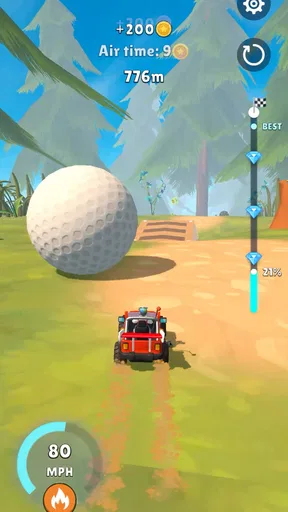
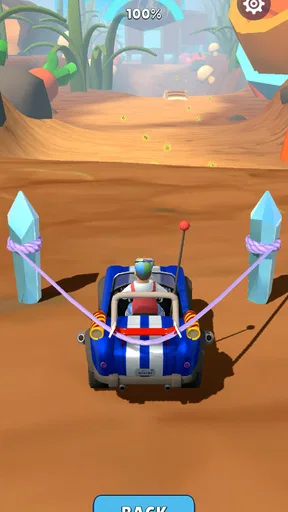
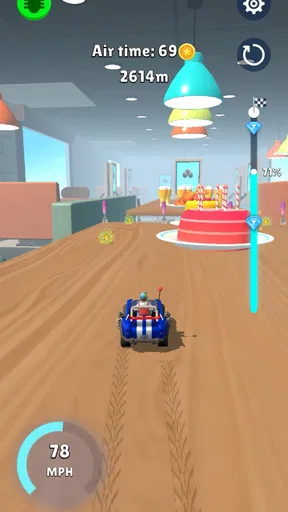
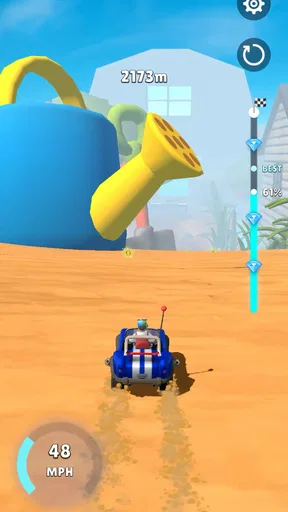
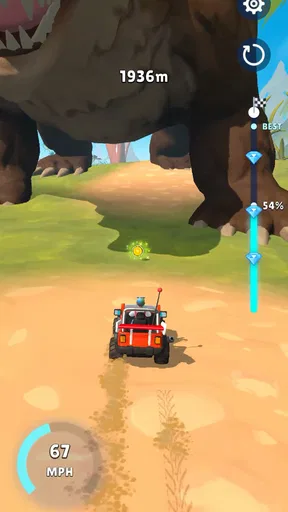
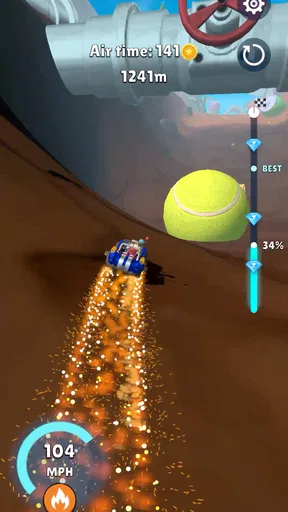
Our Review of Tiny Ride
 Analysis by Appyee
I approached Tiny Ride as a small-scale racing game rather than expecting a full console-style driving simulator. That distinction matters immediately. Its identity is built around the idea of a miniature car adventure, so the appeal is less about technical realism and more about whether a compact ride can create a satisfying sense of movement, place, and momentum.
My first impression is that this is the kind of game I would open when I want a short, focused driving session. The free price makes it easy to try, and the Teen content rating places it in a space that is not aimed exclusively at very young children. Playfo keeps the presentation centered on the tiny-car concept, which gives the game a more personal mood than a conventional racing title built around a large garage, famous tracks, or competitive spectacle.
The current release is version 1.0.3, and it runs on Android 7.0 or later. That broad system requirement is useful if you are testing the game on an older phone, although compatibility alone does not guarantee that every device will feel equally comfortable. Small racing games can be especially sensitive to screen size, touch response, and frame consistency because steering and timing depend on quick visual feedback.
A miniature world with its own visual language
The strongest creative decision is the scale. A tiny car changes how ordinary surroundings feel. A route can seem more intimate, obstacles can become more noticeable, and a short stretch of road can carry the mood of a small adventure rather than simply functioning as a track. That framing helps Tiny Ride stand apart from racing games that rely on speed, traffic, licensed vehicles, or dramatic motorsport presentation.
I like this direction because it gives the game a clear personality before the mechanics have to do all the work. When a racing game has a small, focused setting, visual details become important: the relationship between the car and the road, the way turns are presented, and the amount of space the player has to read ahead. A miniature theme works best when the environment feels designed around the vehicle instead of looking like a normal racing game with a smaller car placed on top.
That same focus creates a trade-off. Players who want a broad collection of vehicles, deep customization, or a realistic driving model may find the compact adventure concept too restrained. Tiny Ride is more appealing when you enjoy a defined visual mood and simple premise. I would not choose it as my first option for a serious racing enthusiast who measures a game by tuning depth, simulation accuracy, or a large competitive ecosystem.
The store summary presents it as a miniature car adventure, while the shorter store wording calls attention to the tiny ride itself. I read those descriptions as a promise of tone rather than a detailed explanation of systems. That means the real question is not whether it advertises a huge amount of content, but whether the small-car setting makes each session feel purposeful. For me, the concept has enough character to justify a closer look, provided expectations remain realistic.
Why the setting affects how the game feels
Scale influences pacing as much as appearance. A miniature vehicle suggests that the player should notice nearby changes instead of simply watching a distant horizon rush past. This can make careful positioning more important than raw speed. It also gives the game room to feel playful without becoming weightless: a small car can still demand concentration when the road narrows or the next turn arrives quickly.
One useful way to approach the game is to treat the environment as part of the driving information. Rather than staring only at the car, I would watch how the route frames the next decision. If a visual landmark appears near a bend, it can become a practical memory cue for braking or changing direction on a later attempt. This is a simple habit, but it makes a compact racing game feel more learnable and less dependent on random reactions.
That approach also reveals a limitation common to tightly focused racers: repetition can become more visible when the world is small. A player who enjoys mastering a familiar route may appreciate that clarity. Someone looking for constant visual novelty may prefer a larger racing game with a broader selection of locations. The miniature setting is therefore both the game’s hook and the boundary around its appeal.
Sound, silence, and the rhythm of a short session
Sound matters more in a small racing game than many people expect. When the visual world is deliberately compact, audio helps establish whether the ride feels lively, calm, playful, or tense. A good soundscape should support the car’s movement and give transitions a sense of weight without drowning out the visual cues needed for steering.
I would judge Tiny Ride’s audio less by whether it tries to imitate a powerful engine and more by whether it keeps the session coherent. The best fit for this concept is a sound design that reinforces the miniature scale: movement should feel immediate, turns should feel readable, and successful progress should have enough response to make the player want another attempt. If the audio becomes repetitive, the game’s small scope will feel narrower; if it supports the route’s rhythm, the same compact design can feel pleasantly focused.
This is also where personal preference matters. Some players want racing games to deliver constant musical energy, while others prefer a quieter experience they can play during a break. I see Tiny Ride as better suited to the second group if the sound remains restrained and functional. It is a game I would consider for a short commute or a few minutes while waiting, rather than something I would automatically use as a long listening session.
A practical tip is to evaluate the game with the sound turned on for the first few sessions, even if you normally play mobile games silently. Audio can help you understand the intended rhythm of movement and may make the miniature world feel more complete. After that, silent play is easier to judge because you will know whether the visual feedback alone is enough for your habits.
Where pacing becomes more important than speed
Racing games often confuse speed with excitement, but a tiny-car adventure can create interest through timing instead. The meaningful moment may be the approach to a turn, the decision to hold a line, or the recovery after a mistake. That kind of pacing rewards attention rather than constant acceleration.
For everyday use, this makes the game potentially convenient. Imagine having a few minutes before an appointment: I would rather start a compact session with a clear objective than load a large racing game that expects a longer commitment. The small-scale presentation supports that use because the experience feels approachable. You can focus on one run, learn from what went wrong, and stop without feeling that you abandoned a huge campaign.
The downside is that short-session design does not suit everyone. If you prefer long races with strategic pit decisions, extensive progression, or a strong sense of an ongoing championship, this is unlikely to replace a fuller racing title. Tiny Ride’s mood depends on keeping the experience contained. That containment is convenient, but it can also limit the emotional build-up that comes from a longer competitive structure.
How the mechanics should serve the miniature theme
The central mechanical test is whether the driving feels connected to the game’s scale. A tiny car should not feel like a full-size vehicle reduced visually while retaining an unrelated handling style. The controls need to make the player feel close to the road, and the camera or viewpoint needs to preserve enough information to anticipate what is coming.
When I assess a mobile racer, I pay attention to the first few attempts rather than judging it only after extended play. I want to know whether steering becomes understandable quickly, whether a mistake feels like my fault, and whether the game gives me a useful reason to try again. Those questions are especially important here because the concept is deliberately simple. Without a clear connection between input and outcome, the tiny-car idea becomes decoration instead of a playable identity.
My preferred workflow would be to begin with controlled runs instead of chasing the fastest possible result. I would first learn how much space the car needs to turn, identify where the route starts demanding attention, and then work on smoother movement. This is more effective than making constant corrections. In a small vehicle, oversteering can be more damaging than entering a turn slightly slowly, so patience is likely to be more valuable than frantic input.
Another useful habit is to separate learning from performance. On the first pass, I would concentrate on remembering the route and recognizing visual cues. On the next pass, I would focus on reducing unnecessary movement. Only after those two stages would I worry about pace. This approach makes a compact racer feel deeper because it turns each attempt into a specific experiment rather than a vague hope of doing better.
Who will enjoy it, and who should look elsewhere
Tiny Ride is a good match for players who like approachable racing games with a strong central idea. It should appeal to someone who enjoys small adventures, prefers short mobile sessions, and does not need a realistic driving simulation to have fun. The free price also makes it a low-risk choice for trying a different kind of racer.
I would be more cautious about recommending it to someone who wants a large competitive community or a highly detailed progression system. The average rating is 3.4 from around twenty ratings, with around ten written reviews, so the public response is still limited rather than broad enough to establish a strong consensus. I would treat that as a reason to try it personally, not as proof that the game is either excellent or poor.
The Teen age rating is another practical consideration for families. I would not assume that a racing label automatically makes a game suitable for every child. Parents should check the actual experience on the device and decide whether its tone and interaction style fit the player. For teenagers and adults, the rating is unlikely to be a barrier, but it is still worth noticing before handing the game to a younger user.
Compared with a traditional arcade racer, Tiny Ride appears more interested in atmosphere and compact identity than in spectacle. Compared with a simulation racer, it is the obvious choice only if you value accessibility over realism. Compared with a casual endless driving game, its miniature adventure framing gives it more personality, but players who want an endlessly changing challenge may prefer a title built specifically around procedural variety.
Small details that can improve the experience
My first recommendation is to play in a position where the entire screen is easy to see and your thumbs are not covering important visual information. On a small phone, that can make a bigger difference than expected. A miniature car and a compact route already demand attention, so a cramped grip can turn a manageable corner into an avoidable error.
Second, use the early sessions to learn the game’s visual grammar. Look for recurring shapes, road edges, changes in color, and any environmental feature that signals a decision point. This is more reliable than trying to memorize every movement. If the setting is coherent, those cues should gradually become a mental shorthand for the route.
Third, change only one part of your driving approach at a time. If you alter speed, steering, and your line through a corner together, it becomes difficult to understand why a run improved or failed. A controlled adjustment gives you better feedback and makes the game’s handling easier to read. That method is particularly useful for players who usually abandon mobile racers after a few frustrating attempts.
Finally, decide whether you are playing for completion, consistency, or relaxation. Those goals produce different expectations. Completion-focused players may want clear progress, consistency-focused players can enjoy refining familiar sections, and relaxed players may simply appreciate the mood of a brief ride. Tiny Ride is more likely to satisfy when you choose the goal before the game chooses it for you.
My atmosphere verdict
As a racing game from Playfo, Tiny Ride has a clear advantage: it knows that a small vehicle can create a different emotional texture from a standard car racer. The miniature setting gives the experience a playful, close-up identity, while the compact format makes it suitable for quick sessions. Its best qualities come from the relationship between art direction, sound, and pacing rather than from a promise of mechanical excess.
That focus also defines the limits. I would not install it expecting a replacement for a full racing simulator, a deep car-collection game, or a long-form competitive title. Players who need extensive variety may outgrow the concept, and anyone who dislikes repeating short routes may not connect with its contained structure. The game works best when you appreciate atmosphere as part of the driving experience.
With over ten thousand installs, it has reached a modest mobile audience, but its relatively small review sample means I would keep my expectations personal rather than relying on the public score alone. Since it is free and supports Android 7.0 or later, trying it is straightforward for compatible users. I would give it a chance if you want a gentle, distinctive racing mood and enjoy learning a route through visual rhythm.
My recommendation is simple: choose Tiny Ride for its miniature atmosphere, not for features it was never trying to promise. I can see it working well as a short break-time game, especially for someone who values a coherent setting and a focused ride. If your ideal racer is measured by realism, scale, or endless content, another option will serve you better. If you want a small adventure with enough character to make a brief drive feel intentional, this is worth a try.
Privacy and Permissions
See what permissions an app requests and how it handles your data.
- Wi-Fi connection information
- view Wi-Fi connections
- Other
- view network connections, full network access, run at startup, control vibration, prevent device from sleeping, Google Play license check
Verdict
Strengths of Tiny Ride
- Simple controls make the game easy to pick up and play.
- Short races are ideal for quick breaks or casual sessions.
- Bright visuals give the game a cheerful, approachable style.
- Unlockable content adds motivation to keep completing rides.
- Runs smoothly on many modern Android and iOS devices.
Limitations of Tiny Ride
- Gameplay may feel repetitive after extended play sessions.
- Some challenges can become frustrating without precise timing.
- Progress may feel slow if rewards require many completed rides.
- Small on-screen elements can be difficult to see on phones.
- The experience may offer limited appeal for players seeking depth.
Similar Picks in This Category
View All
Hill Climb Racing
Fingersoft4.3

Dr. Driving
SUD Inc.4.2

Traffic Rider
skgames4.5

Asphalt 8 - Car Racing Game
Gameloft SE4.6

Race Master 3D: Car Racing
Beresnev Games4.6

Extreme Car Driving Simulator
AxesInMotion Racing4.3
Frequently Asked Questions
What is Tiny Ride and how does the game work?
Tiny Ride is a casual driving game focused on short, entertaining races with compact vehicles and simple controls. Players guide their car through colorful tracks, avoid obstacles, collect useful items, and try to finish as quickly as possible. Its pick-up-and-play design makes it suitable for brief sessions, although later levels may require better timing and more careful steering.
Is Tiny Ride free to download and play?
Tiny Ride can generally be downloaded for free, allowing players to try the main driving experience without an upfront purchase. However, depending on the version and platform, the game may include optional in-app purchases, advertising, or unlockable content. It is worth checking the store listing before downloading, especially if you want to avoid unexpected charges or frequent interruptions during play.
Does Tiny Ride require an internet connection?
Tiny Ride may allow some basic driving and racing activities to be played offline, which is convenient when traveling or when a stable connection is unavailable. Nevertheless, internet access can be necessary for advertisements, updates, cloud features, leaderboards, or certain online events. Availability may differ between Android and iOS versions, so confirm the current requirements on your device’s app store.
Is Tiny Ride suitable for children and beginners?
Tiny Ride is designed with straightforward mechanics, bright visuals, and controls that are relatively easy for beginners to understand. Younger players may enjoy the short races and playful presentation, but parents should still review the store rating, advertising, and purchase settings. If the game includes competitive features or optional payments, enabling parental controls is recommended before handing the device to a child.
What devices are compatible with Tiny Ride?
Compatibility depends on the operating system, device model, and version of Tiny Ride available in your region. Most recent Android phones and iPhones should offer a smoother experience, while older devices may experience slower loading, reduced graphics quality, or limited support. Before installing, check the official Google Play or App Store listing for the required operating-system version and available storage space.
Play our best games!


